
O Céu Por Cima de Cá
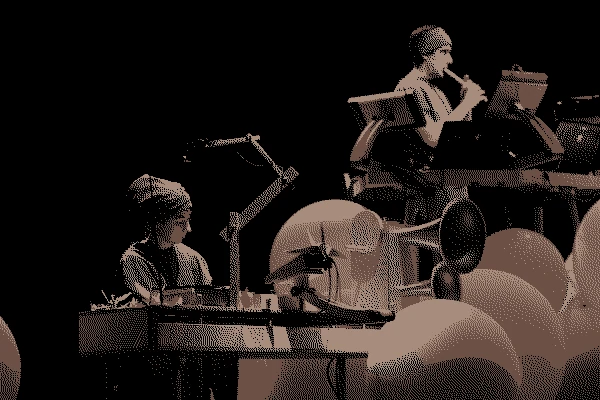
I don't have the right words to describe what O Céu Por Cima de Cá means to me. On the one hand, it is one of the first shows in which I had the pleasure of stepping on stage with five other incredible artists from the Companhia de Música Teatral who, since then, and largely due to the time we spent together building this play, have become my best friends. Family, really.
It was also a huge cry of defiance against the limitations imposed by the pandemic. Proof that it was possible to maintain and create connections between people, whether personal or artistic, while keeping everyone involved safe. That the pandemic could take a lot from us (and it did, I still haven't finished mourning and I don't think most people have even started), but it cannot take away what makes us inherently human, which is society and the relationships we build with others.
Regarding the show, it was perhaps the most megalomaniacal thing I set out to do on a technical level, with projection management and the release of samples and audio effects on six microphones and two digital instruments. I had to control two incredibly complex projects on two computers, using two different software programmes (TouchDesigner for video and Ableton Live for audio). At the same time, I was also managing a Zoom session for members of the audience who were watching and interacting with the characters on stage from a distance, while also playing saxophone and other instruments. Looking back with the distance of years, and with everything I have learned technically in the meantime, I can only be amazed, embarrassed and simultaneously proud of the madness that was my entire management of the show from that "control tower" where I find myself on stage. The fact that the show never failed or collapsed halfway through is something that fascinates me, and even in subsequent editions years later, its stability on opening night (despite the instability in rehearsals) is incredible to me.
It is a deeply human show, an embrace and acceptance of suffering, a look at the world through the eyes of characters who do not exist (Anjitsuri), half birds, half people, half angels, who do not speak but respond in poems and songs and dances and jokes. A call centre of suffering with no answers to give. A meeting point with all those who saw us, where we shared and remembered what makes art an inseparable part of the human experience, which is the connection with others.
It is a show that actually satisfies me so much as an artist and a person that I completely ignore the potential impact it will have on the audience. I think they have enjoyed it, but I have no idea if they see in those clouds and those beings the magic that I see.
A little like all the CMT shows I have participated in, it is something that goes beyond a simple job and has become an inseparable part of my growth as a person and an artist, and has profoundly shaped my view of the world and my relationship with those around me.